Explore the intersection of mathematics and art. Learn how simple recursive functions can generate complex patterns like the Sierpinski Triangle using Processing.

We come across patterns and symmetry all around us in our daily life. Every symmetry has some maths inside it. Recursion helps us discover the core essence of a pattern and reflect it into code — making the computer do all the calculations and produce something beautiful.
Recursion is just doing something over and over again with slight modifications.
Let’s take a circle.
We draw another circle half the diameter of the previous one until the diameter becomes 1.
The end condition is important — otherwise, the recursion will never stop (though modern computers eventually stop it due to stack limits).
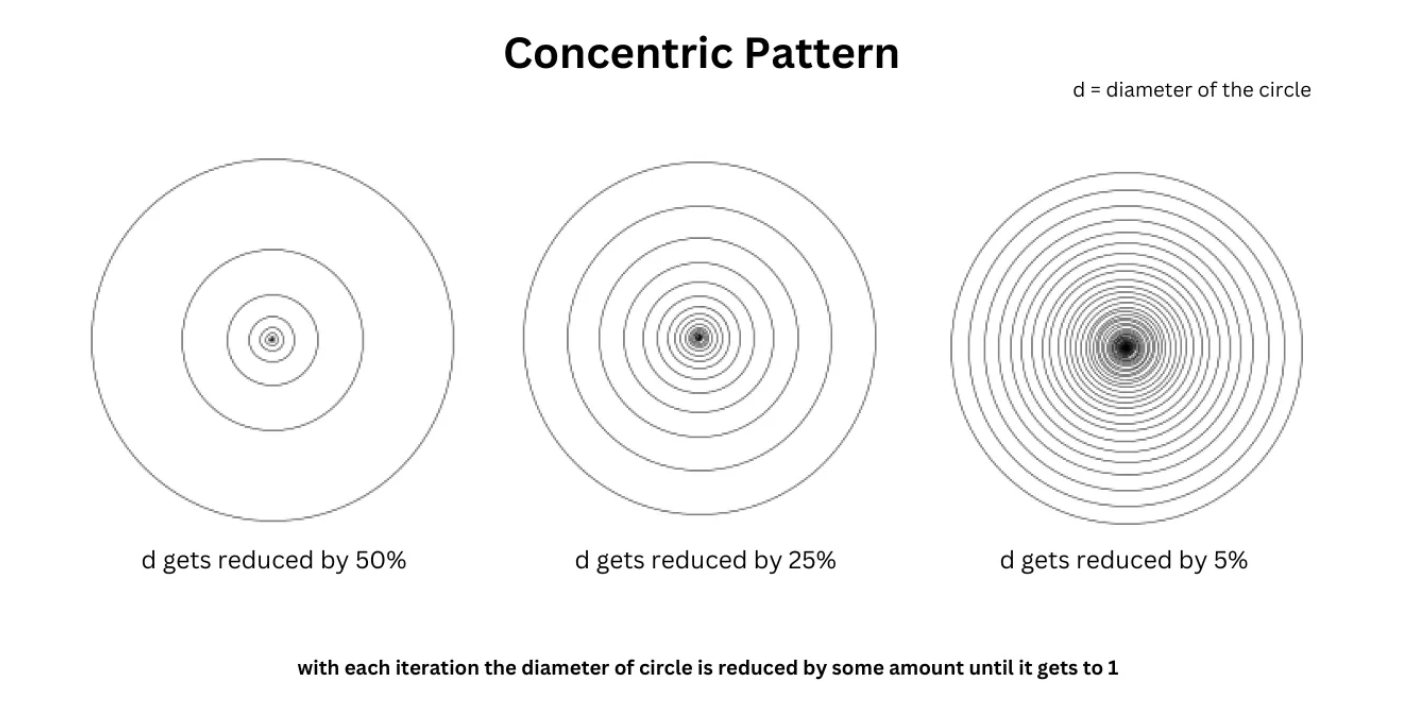
These patterns are computer-generated using a very simple recursive function:
void drawCircle(float x, float y, float d) {
    noFill();
    strokeWeight(1);
    circle(x, y, d);  // draws a circle at x, y with diameter d

    if (d < 1) return;  // condition to stop the recursion

    drawCircle(x, y, 0.50 * d); // calls itself with d = d/2
}Now let’s do something more interesting.
Instead of drawing the next circle at the same position, let’s move the X position:
x = x + d/2andd = d/2
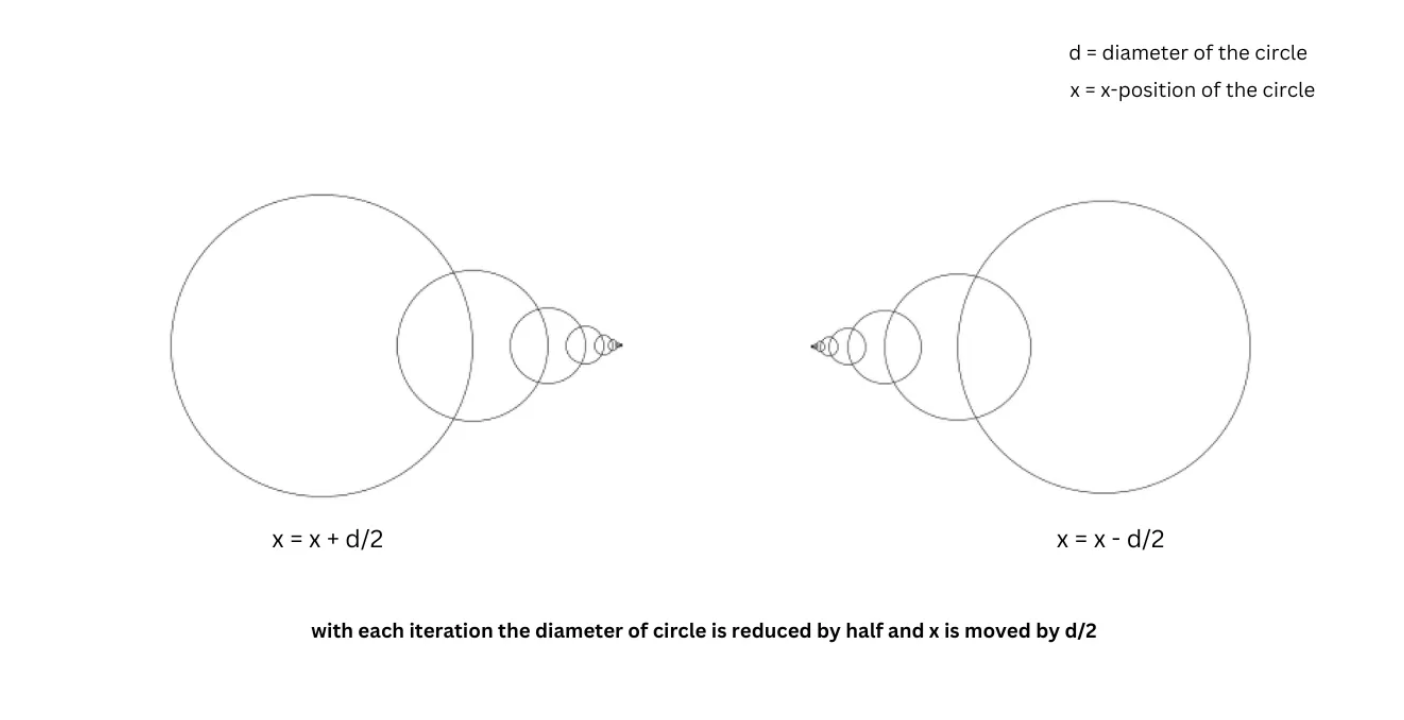
We can extend this idea to the Y direction as well:
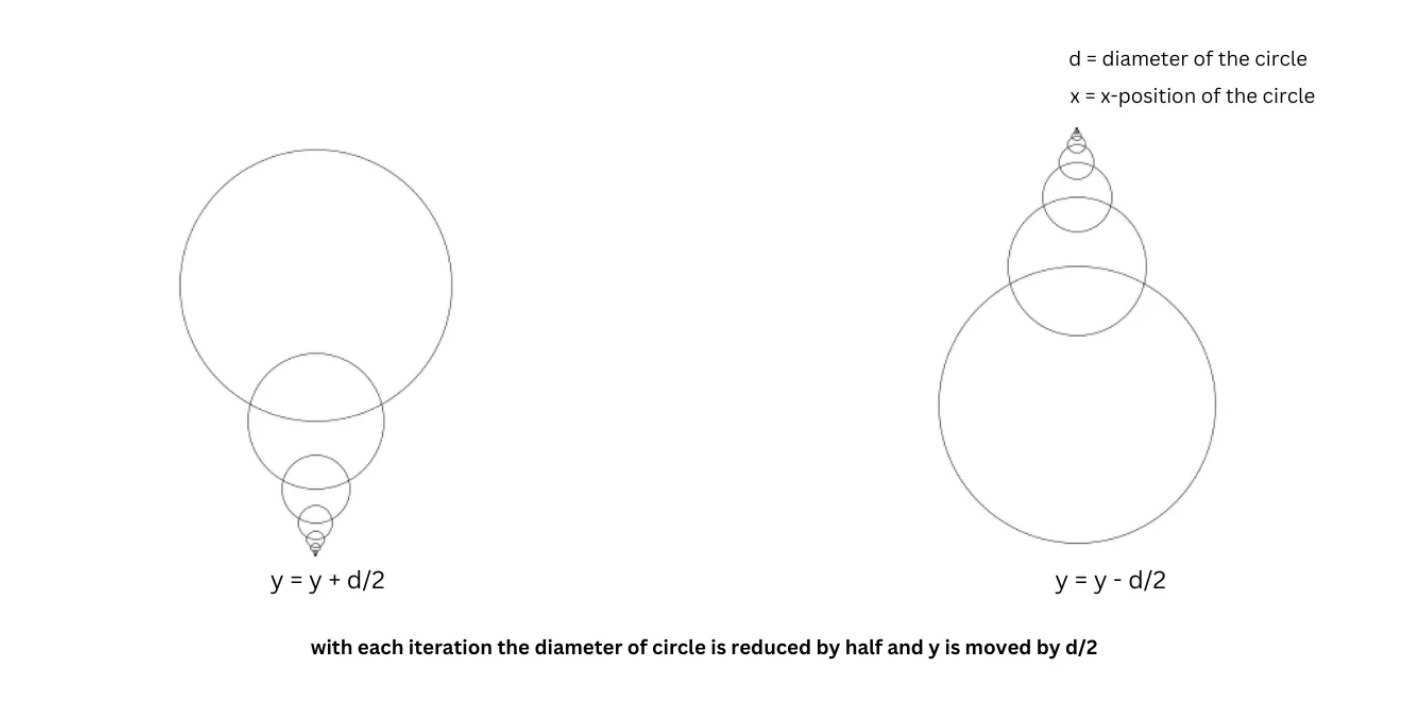
Now things get fun.
Let’s combine:
x = x + d/2x = x - d/2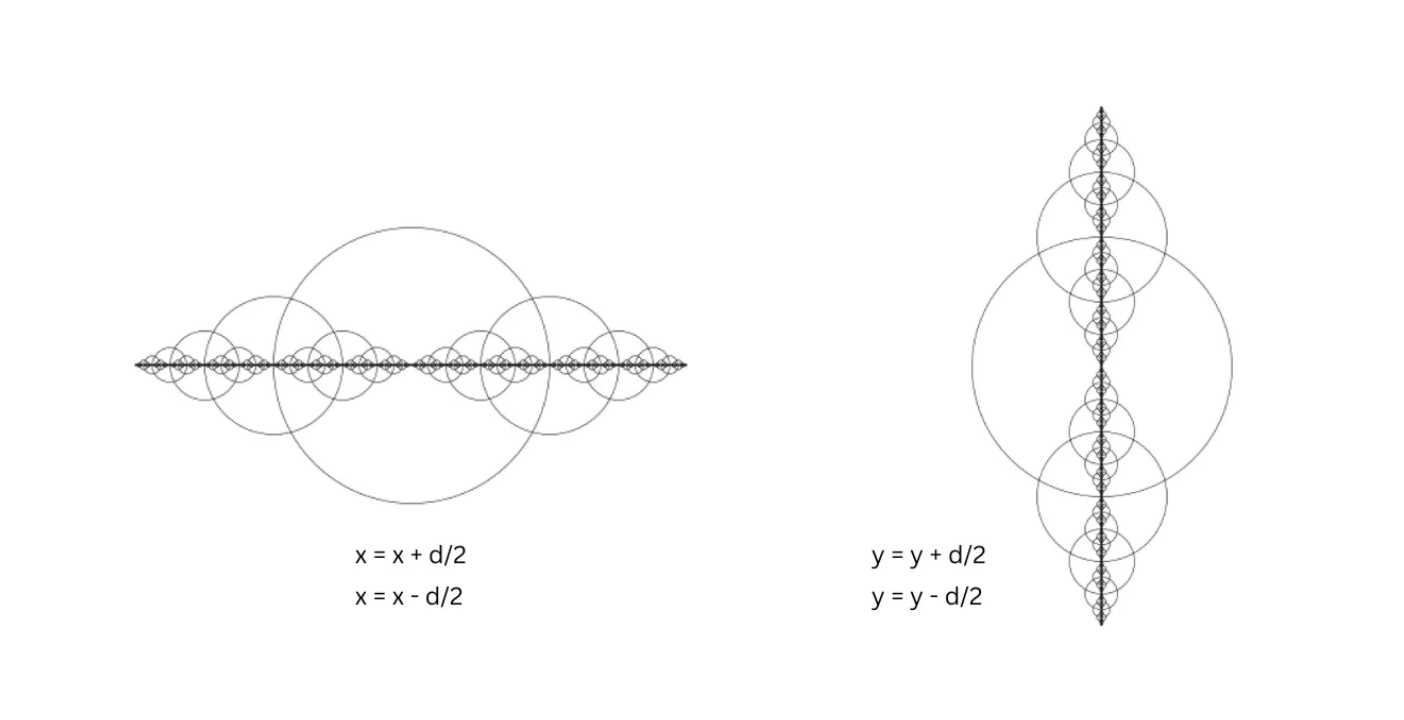
How cool is that?
Obviously, this level of precision is beyond human capability — computers are extremely good at repeating patterns perfectly.
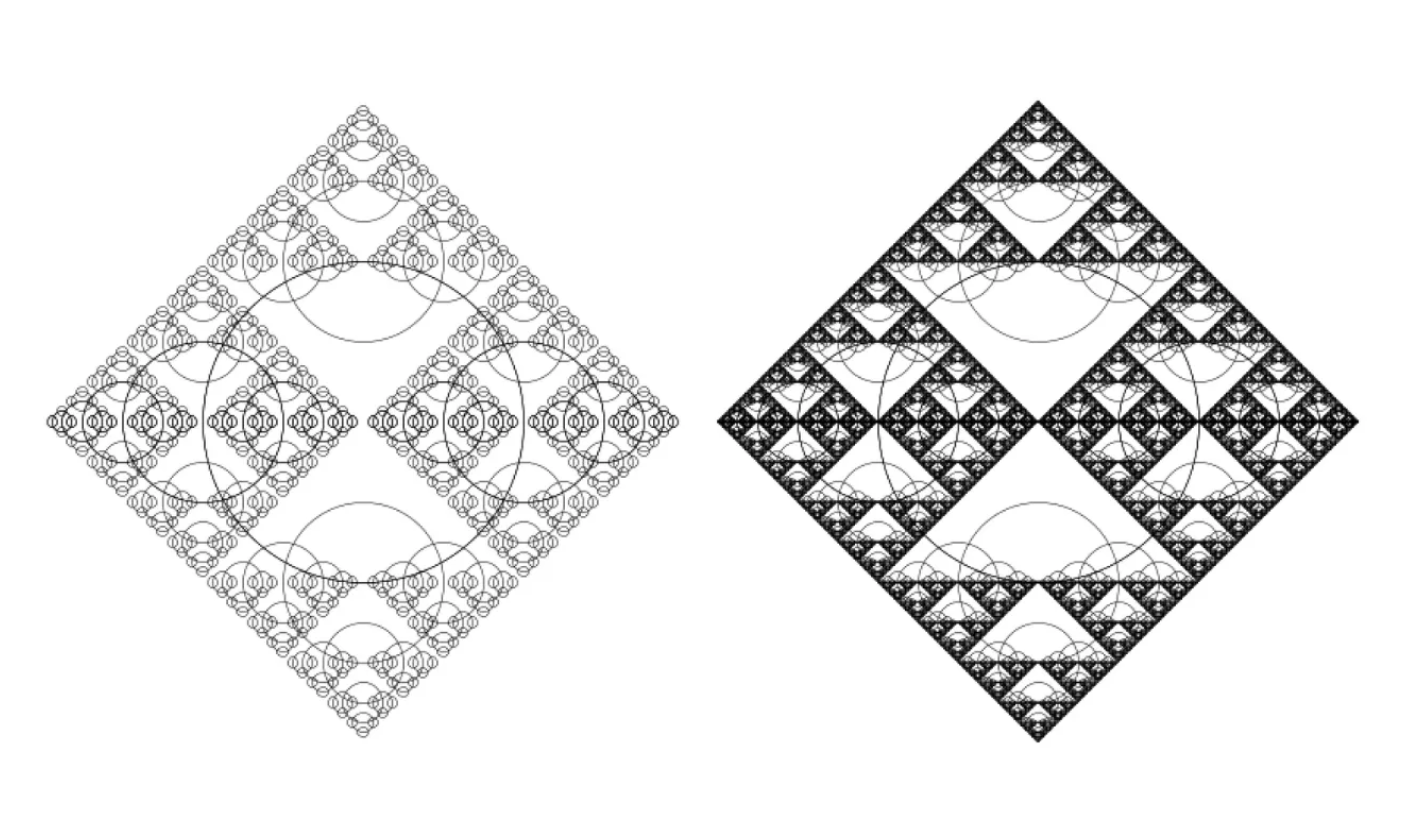
Now let’s combine:
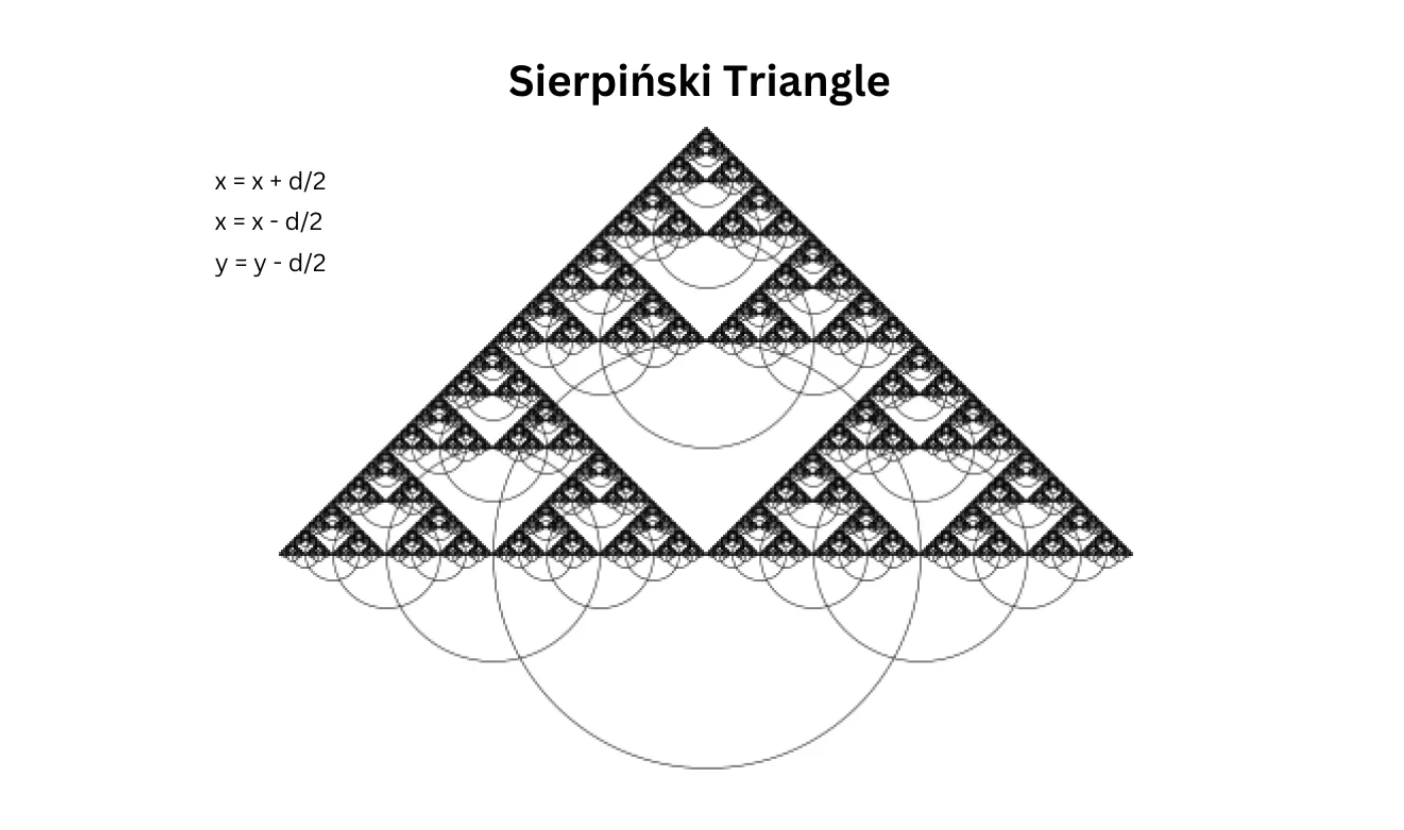
🎉 Congratulations! You’ve just created a Sierpinski Triangle.
The Sierpinski Triangle is a self-similar fractal. It consists of an equilateral triangle, with smaller equilateral triangles recursively removed from its remaining area.
It is named after the Polish mathematician Wacław Sierpiński.
Here is the code for the above figure:
void drawCircle(float x, float y, float d) {
    noFill();
    circle(x, y, d);
    strokeWeight(0.5);

    if (d < 1) return;

    drawCircle(x + d/2, y, d/2);
    drawCircle(x - d/2, y, d/2);
    drawCircle(x, y - d/2, d/2);
    // drawCircle(x, y + d/2, d/2);
}From this point onward, you can:
Every time, you’ll get a completely different pattern.
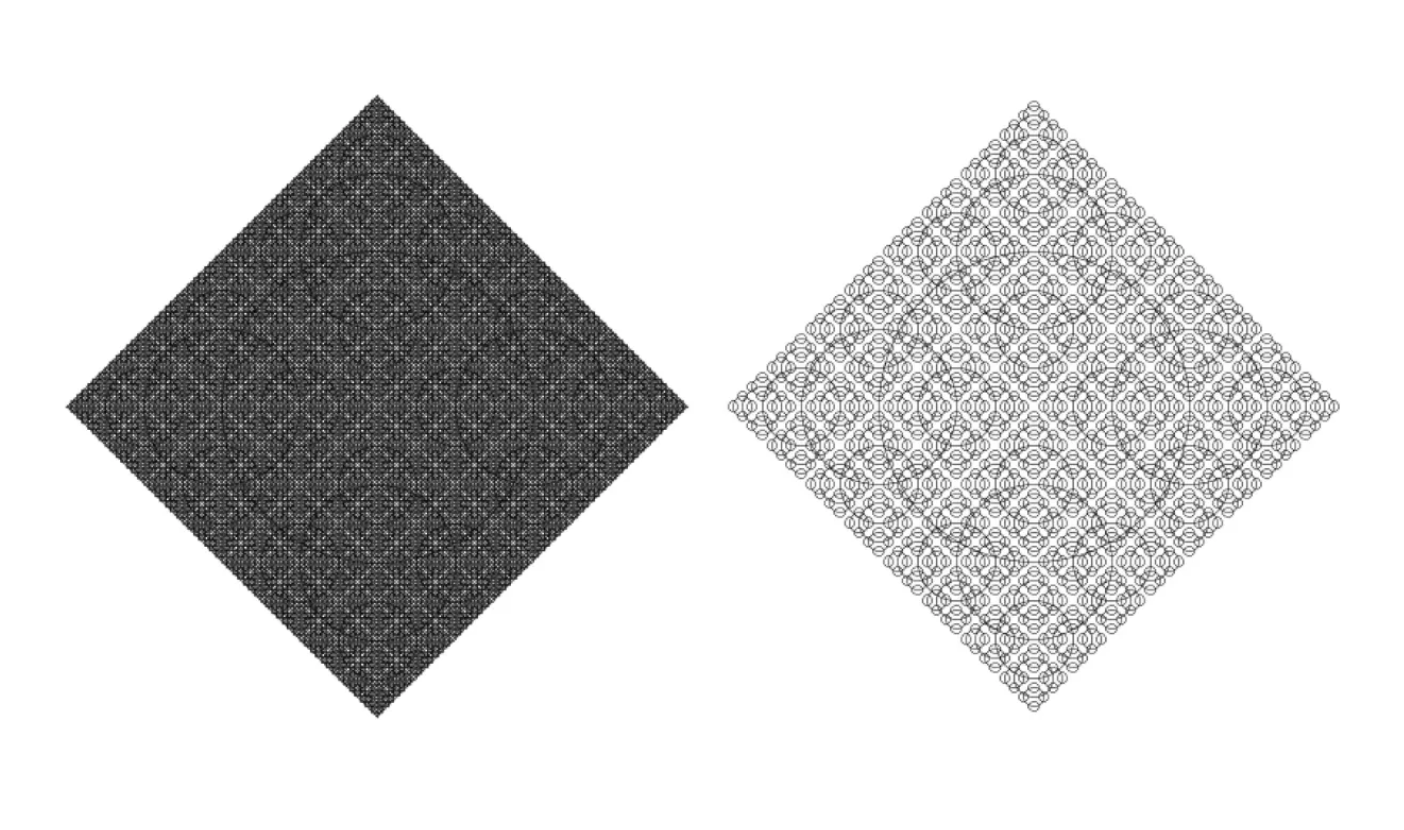
Achieving this through computation took years of technological advancements. Computers can do far more sophisticated things — this is just the tip of the iceberg.
If this felt interesting, consider following me. That motivates me to write more such articles 🙂
If you want to know:
Leave a comment and I’ll write a follow-up article.
See you next time! 🚀
New tutorials, book updates, and behind-the-scenes notes from the studio. No schedule, no spam.